PIR Panels
Square Plate freezers are commonly used for freezing brick-shaped products in mold or boxes. In plate freezers, refrigerant is allowed to circulate inside thin channels within the plates.
The packaged products are firmly pressed between the plates. High rates of heat transfer can be obtained between the packaged product and the evaporating plates.
We are proud to be the drafter of the China National Standard of Plate Freezer (GB / T22734-2008).
Separate liquid supply and suction for each plate, even supply with high efficiency and better freezing performance
Mass production, freeze in blocks
Unique one-piece insulated enclosure with better insulation and strength
Full stainless steel structure with good appearance, easy to clean
Aluminum-alloy evaporative plate with better freezing capacity
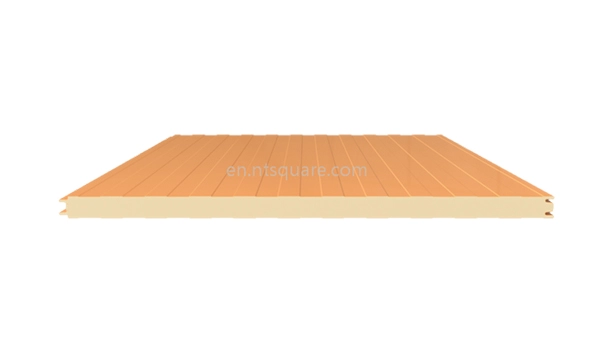
Product Features
Why Choose Square's PIR Panels
Explore the key product features, including Thermal Resistance, Hardly Flammable, Environment Friendly, and the engineering advantages behind this system.
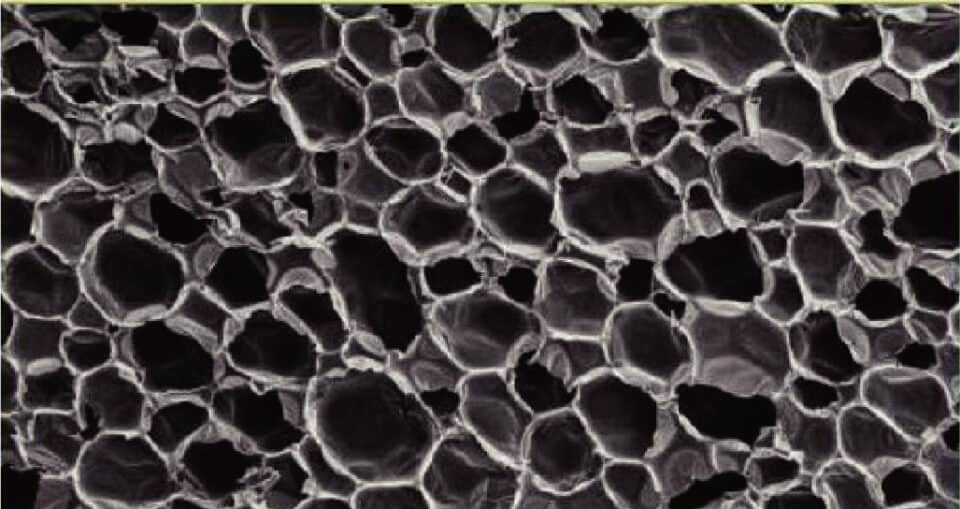
Thermal Resistance
- Closed Cell Content≥93 %
- Water absorption rate ≤3%
- Thermal conductivity≤0.022W/(m • k)
- Excellent thermal insulation performance.

Hardly Flammable
Our products have passed the type test of “National Fireproof Building Material Quality Supervision and Inspection Center”. The combustion grade reaches GB8624-2012 standard B1(B-s2, d0, t1) flame-retardant grade. Manufactured product B1 grade, bare board core B1 grade insulated panels are available.

Environment Friendly
Our PIR Panels use n-pentane high-pressure foaming, without any CFC, HCFC, and HFC, and also respond positively to the Vienna Convention for the Protection of the Ozone Layer.
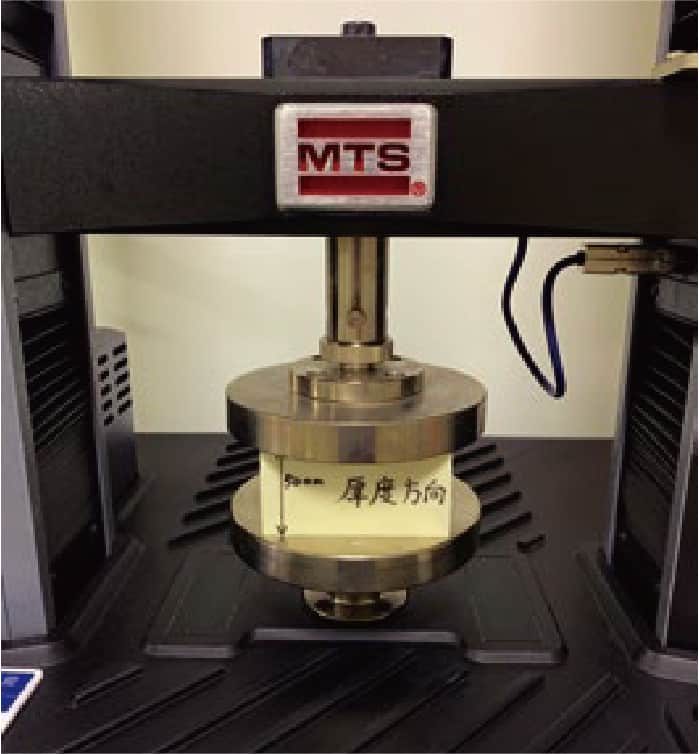
High Strength
Experience durability with thickness direction compressive strength ≥140kPa and bonding strength ≥100kPa.

Appearance
Choose from a range of panel steel skin patterns and colors to suit your aesthetic preferences.
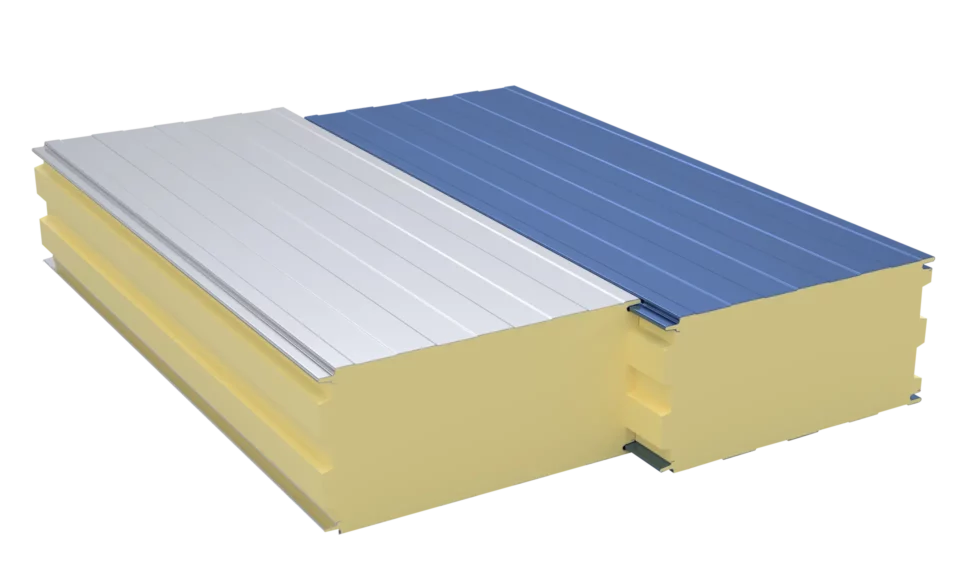
Easy Installation:
Our pre-fabricated panels ensure convenient on-site assembly, disassembly, and reusability, facilitating hassle-free construction.

Hygiene and Food Safety
Benefit from excellent airtightness, preventing moisture intrusion and the growth of toxic mold and bacteria, ensuring hygiene and food safety.
Technical Specifications
Parameters
PIR panel parameters cover panel thickness, facing materials, joint type, insulation performance, fire classification, dimensions, accessories, and cold-room installation requirements.
| Core material | PIR (Polyisocyanurate) rigid foam, closed-cell structure |
|---|---|
| Production line | German Hennecke continuous foaming line — in-house manufacturing |
| Panel thickness | 50 / 75 / 100 / 120 / 150 / 200 mm |
| Standard width | 1,000 mm or 1,200 mm (custom widths available) |
| Panel length | Up to 12,000 mm (transport-limited); longer on request |
| Thermal conductivity (λ initial) | ≤ 0.022 W/m·K (per EN 13165) |
| Thermal conductivity (λ aged) | ≤ 0.026 W/m·K (20-year accelerated aging) |
| Fire rating | B2 (limited combustibility) per DIN 4102 |
| Foam density | 38 – 42 kg/m³ (standard) |
| Skin materials | Color-coated steel / Stainless steel (SUS304, SUS316) / Aluminium |
| Skin thickness | 0.4 – 0.8 mm (per structural requirement) |
| Joint system | Cam-lock with integrated thermal break; tongue-and-groove profile |
| Typical lead time | 4–8 weeks (cut-to-order production) |
| Design life | 25+ years (thermal); 20+ years (structural, normal environment) |
Design Details
How each subsystem is engineered
Expand any section below for the engineering approach behind each critical subsystem — with links to detailed Technology pages.
PIR vs. PU vs. EPS — Material Comparison
PIR (Polyisocyanurate): Best fire performance among organic insulation foams. Chars rather than melts. λ ≈ 0.022 W/m·K. B2 fire rating. Moderate cost premium over PU.
PU (Polyurethane): Good thermal (λ ≈ 0.024 W/m·K). Flammable — melts and contributes to flame spread. B3 typical. Lower cost.
EPS (Expanded Polystyrene): Lowest cost. λ ≈ 0.035–0.040 W/m·K. Non-toxic smoke. Lower compressive strength. Budget applications.
For food processing and cold storage, Square recommends PIR as the optimal balance of fire safety, thermal performance, and long-term value.
Cam-Lock System & Thermal Break
The cam-lock joint is the critical interface:
- Cam mechanisms spaced at 300–500 mm along each vertical joint
- Quarter-turn engagement draws panels together with 2–3 mm compression on the joint seal
- Integrated thermal break: non-metallic strip prevents metal-to-metal contact between interior and exterior skins
- Tongue-and-groove profile with dual sealing lips: one warm side, one cold side
- Assembly speed: 2–3× faster than traditional screw-fixed panels
In-House Manufacturing Advantage
Square is one of very few panel manufacturers in Asia operating a continuous German Hennecke foaming line:
- Full control over foam formulation and density — consistent quality
- Custom lengths at no premium — panels cut to your exact facility height
- No dependency on third-party foam suppliers — reliable delivery schedule
- Full traceability: each panel linked to its production batch and QC test results
Panel Selection by Application
Freezer rooms (−18 to −25°C): 150–200 mm PIR. Stainless steel interior. Vapor barrier critical.
Chiller rooms (0 to +4°C): 100–120 mm. Color-coated or stainless steel per hygiene requirement.
Food processing halls: 75–100 mm. Stainless steel interior for CIP (Cleaning-in-Place)/washdown. Sloped floor interface.
Blast freezers (−35 to −40°C): 200 mm minimum. Stainless steel throughout. Floor frost heave protection essential.
Installation & Site Support
Square provides full installation support:
- Pre-installation: detailed panel cutting schedule; all panels pre-cut to length before shipping
- Installation: Square supervisor on-site, or full installation team available
- Joint sealing: food-grade silicone sealant applied to all internal joints
- Quality verification: thermal imaging survey after installation to identify any thermal anomalies
Proven in These Food Applications
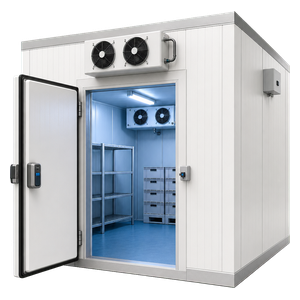
Cold Storage
Insulated Enclosures support cold storage for fruit, meat, seafood, wine, chocolate and seeds.
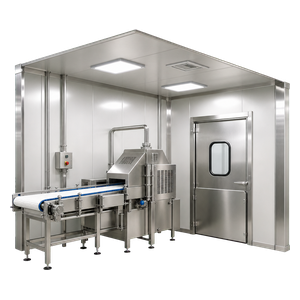
Food Processing Halls
Creates hygienic, temperature-controlled spaces for meat, seafood, bakery and prepared-food processing.
Blast Freezer Enclosures
Provides high-performance insulation for rapid-freezing rooms handling meat, seafood and tuna.
Clean Rooms
Supports controlled food and pharmaceutical environments requiring hygienic, stable interior conditions.
Case Studies
PIR Panels in Operation Worldwide
Real production lines with performance data — not renderings, not claims. Each installation documented with commissioning data.
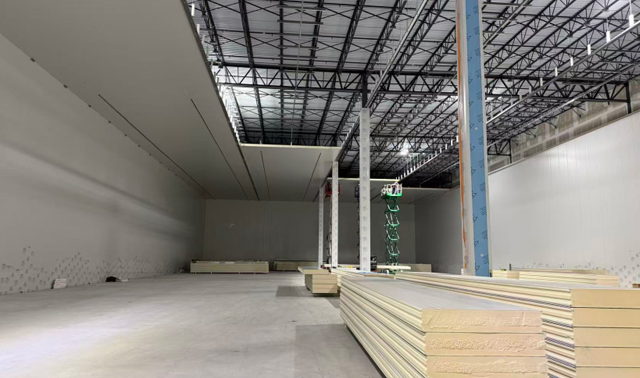
Box-in-Box Cold Storage Deployment in North America
Published by: Square Technology Group – North America Sales Team Executive Summary Box-in-box cold storage
Frequently Asked Questions
No. Square panels have ≥93% closed-cell content, excellent airtightness, and ultra-low water absorption (≤3%), preventing moisture intrusion and mold growth.
Yes. With compressive strength ≥140 kPa and bonding strength ≥100 kPa, our PIR panels are engineered to support high-rise cold storages and demanding industrial environments.
We own CE, EAC, INF, CNAS, ISO, ASME, PED, U2, CSA, CRN certifications and 300+ patents, as well as 350+ engineers. Square vertically integrated production ensures quality control from raw materials.
Square offers customized one-stop cold chain solution that meets your requirements. You can choose from various steel skin patterns, colors, and finishes for both internal and external sides, ensuring both functionality and visual consistency.
PIR (Polyisocyanurate) panels are rigid foam insulation panels with enhanced fire resistance and thermal stability, ideal for cold storage and industrial applications.(What is PIR Panel?)
PUR (Polyurethane) panels are versatile insulation panels known for good thermal performance and cost-effectiveness, commonly used in general building insulation.(What is PUR Panel?)
The key difference is that PIR panels offer better fire resistance, higher thermal stability, and lower smoke emissions compared to PUR panels, making them more suitable for demanding environments.
Engineering Inquiry
Discuss Your PIR Panels Project
Share your product type, target capacity, line layout, utilities, and site conditions. Our engineers will review your requirements and recommend a suitable PIR Panels configuration.