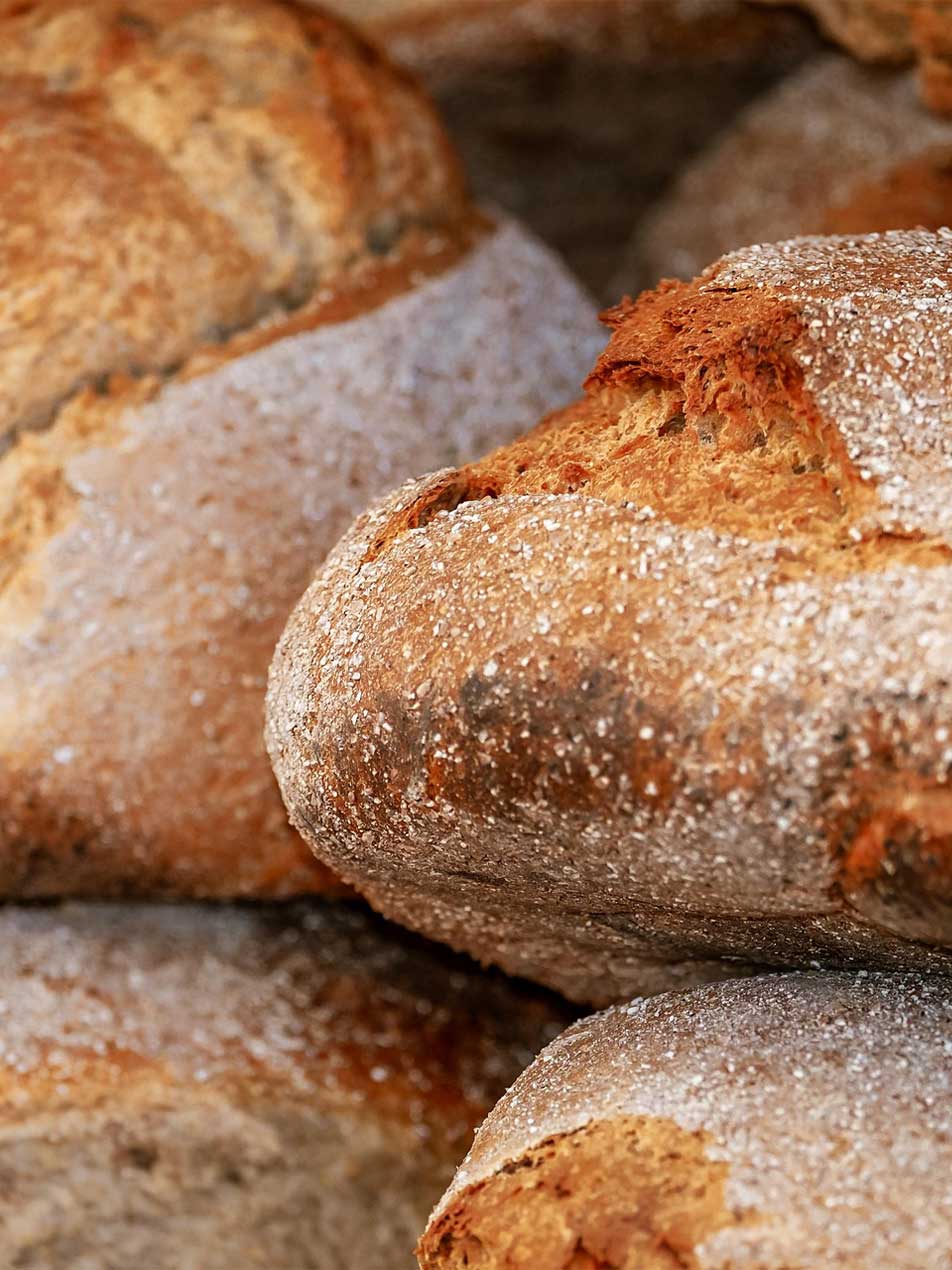
Bakery Products
Freezes bread dough, pizza dough, croissants, baked bread and buns while protecting structure and moisture.

Square‘s continuous proofer is suitable for the proofing of a variety of bakery products and pastries.
Inside the insulated enclosure, our conveyor system facilitates seamless movement. Moisture and temperature regulation within the proofer is automated through PID-controlled valves.
This versatile proofer accommodates various bakery products and pastries, ensuring superior proofing quality with consistent moisture and temperature levels, surpassing traditional methods in automation and precision.
PID Control
High Automation
Suitable For All Kinds Of Baked Goods And Pastries
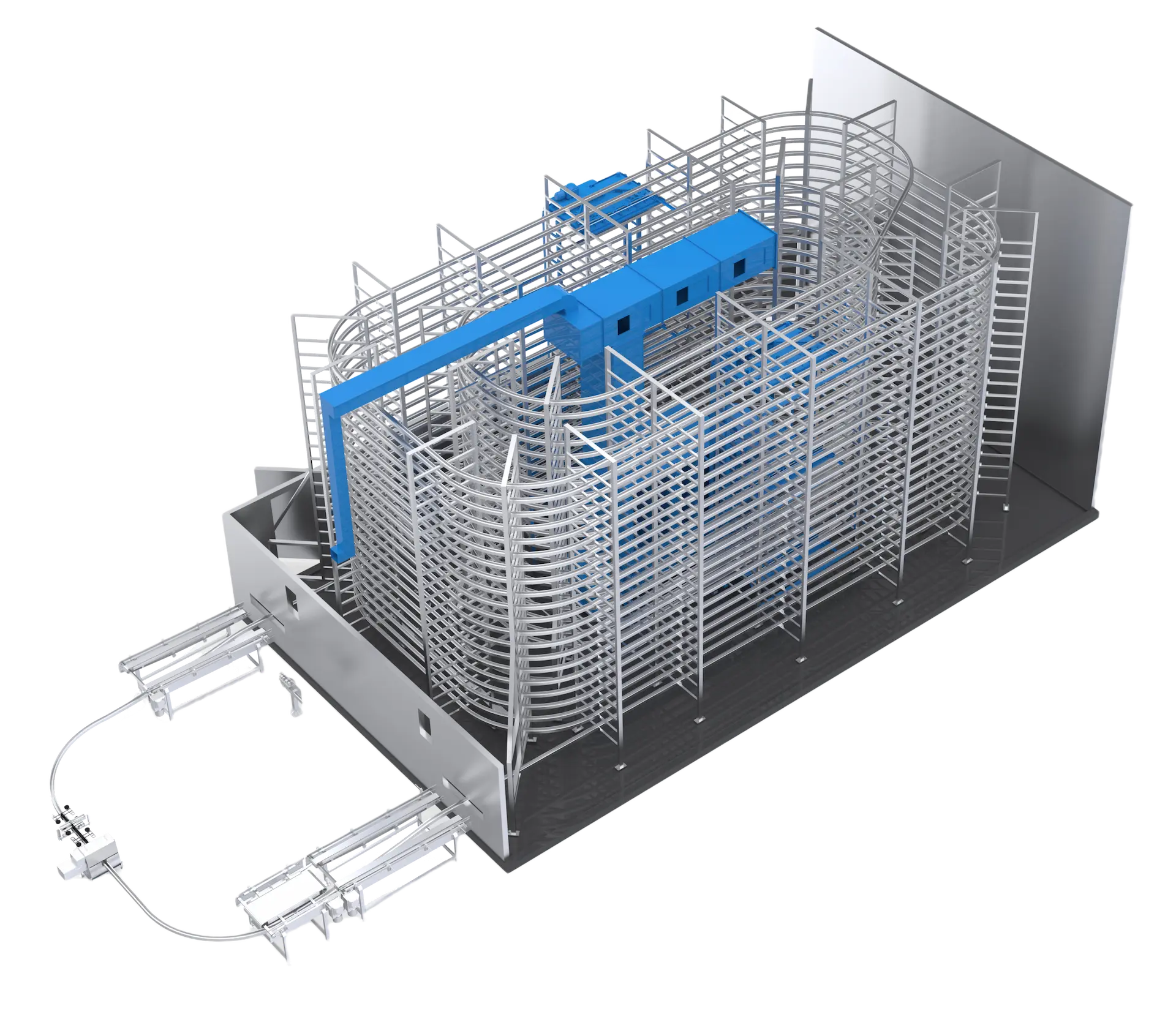
Product Features
Explore the key product features, including Continuous transmission, Rail design, VFD Control and Easy Adjustment, and the engineering advantages behind this system.
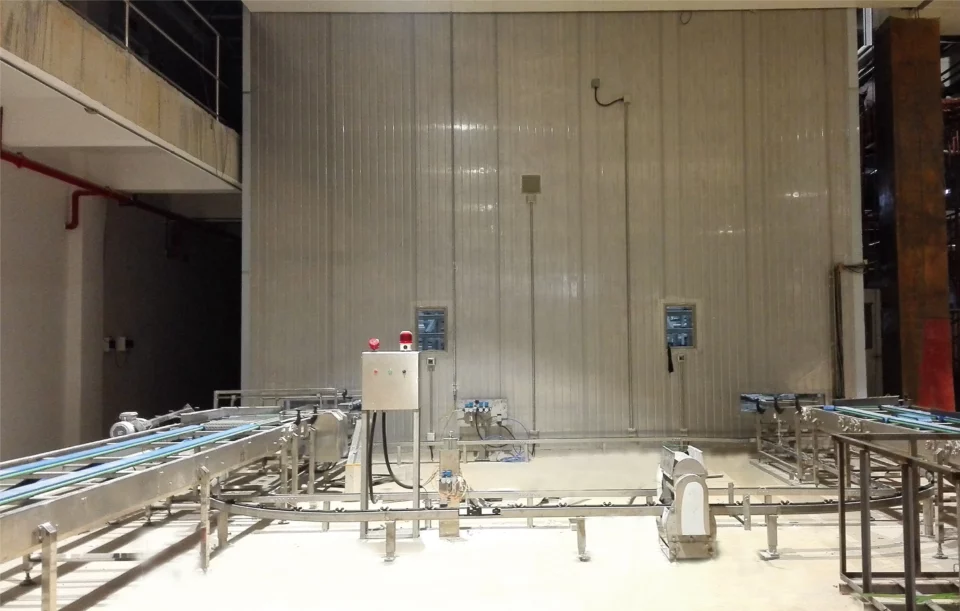
Our continuous drive system significantly boosts output, reducing labor input and ensuring seamless production continuity for high-volume operations.
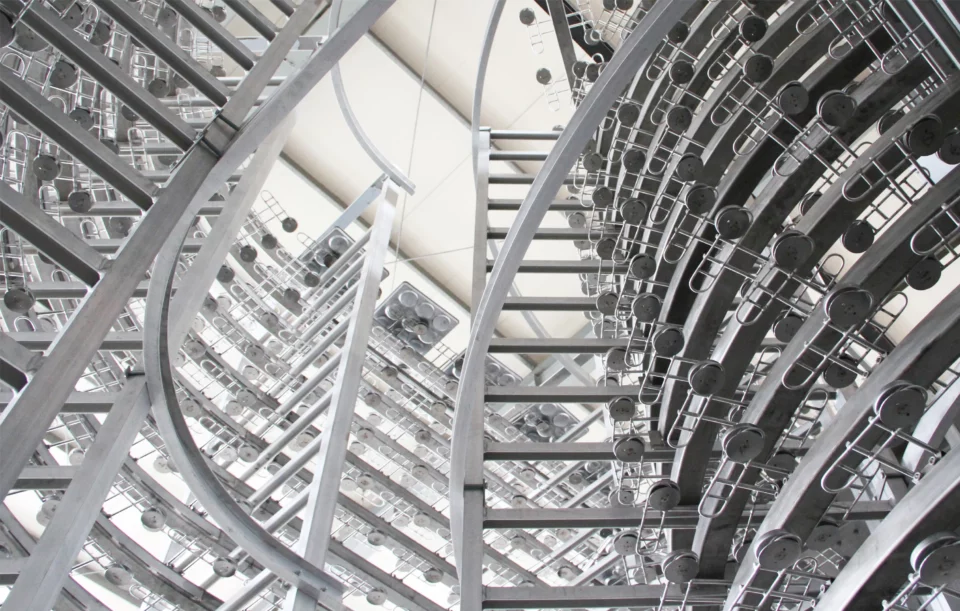
The upward-opening track design effectively prevents debris and dust generated from chain friction from contaminating lower-level products, ensuring product hygiene.
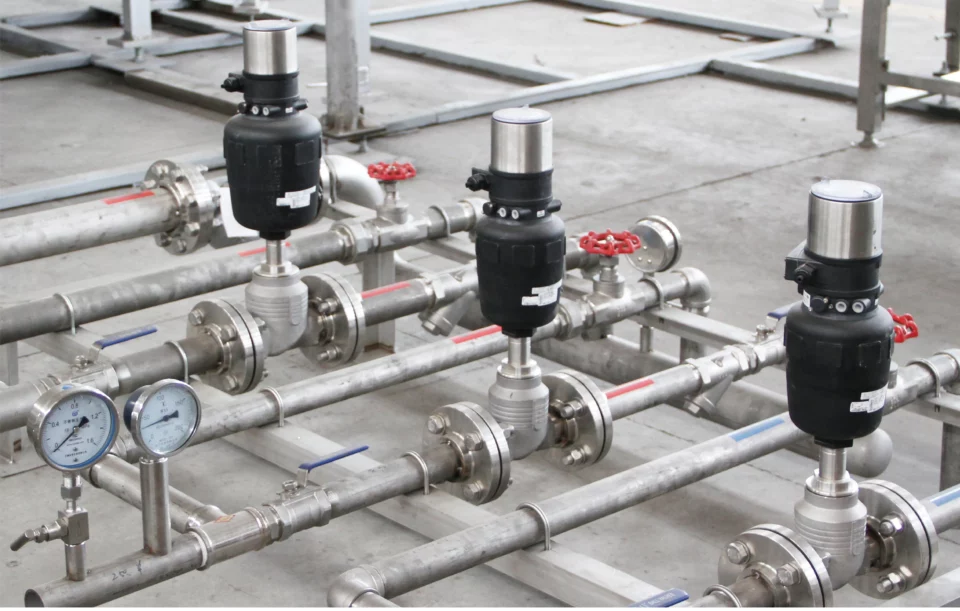
The duration time can be easily adjusted for product varieties, as proofing time varies as per different products. Easily adjustable with multiple speed settings, effectively controlling the production time of products in the proofing device.
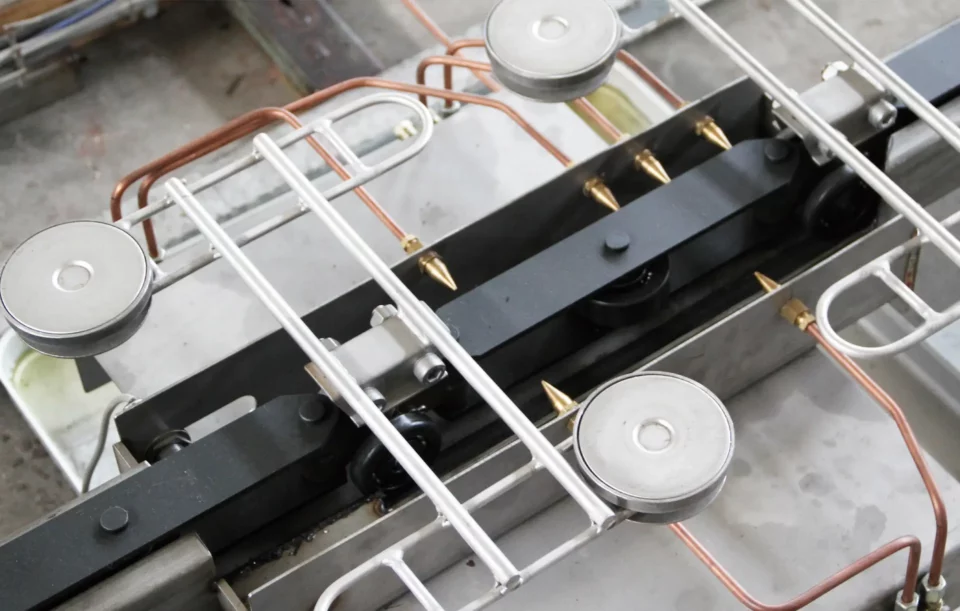
Using an airflow regulation device and PID loop resistance/capacitance humidity controller, the air is continuously circulated up and down through a centrifugal fan and heat exchanger to ensure uniform temperature and humidity in the insulation enclosure. Humidity control accuracy can be controlled within ±3%, temperature of ±2℃.
Technical Specifications
Continuous proofer parameters cover belt width, proofing time, temperature and humidity range, airflow, sanitation, controls, enclosure, loading layout, and bakery line integration.
| Configuration | Straight-line tunnel or multi-pass (serpentine) belt path |
|---|---|
| Belt system | Tray conveyor / Mesh belt / Plastic modular belt — per product type |
| Proofing time | 15 – 90 min (belt speed variable, path length per requirement) |
| Temperature range | Ambient +5°C – 42°C (heating only; optional cooling for retarding) |
| Humidity range | 70 – 95% RH (adjustable, ±3% control accuracy) |
| Heating method | Electric finned elements / Steam coil / Hot water coil |
| Humidification | Steam injection / Ultrasonic mist / Spray nozzle |
| Air circulation | Low-velocity recirculation fans, VFD-controlled, 0.3–0.8 m/s at product |
| Enclosure | PIR insulated, stainless steel interior & exterior, fully welded floor |
| Control system | PLC touchscreen, recipe storage, line synchronization, VPN remote access |
| Cleaning | CIP (Cleaning-in-Place) spray system / Manual washdown / Belt washer on return path |
| Typical lead time | 14–18 weeks |
| Design life | 15+ years (structural); 8–10 years (belt & mechanical components) |
Design Details
Expand any section below for the engineering approach behind each critical subsystem — with links to detailed Technology pages.
Proofing is the final fermentation stage where yeast produces CO₂ gas that expands the dough structure. Environmental control is critical:
Product handling is critical for dough products — they are soft, sticky, and easily deformed:
Several humidification methods, selected per water quality and control requirements:
The continuous proofer is the central element connecting upstream dough preparation to downstream baking:
Some production schedules benefit from retarding — slowing or pausing fermentation by cooling dough:
Freezes bread dough, pizza dough, croissants, baked bread and buns while protecting structure and moisture.
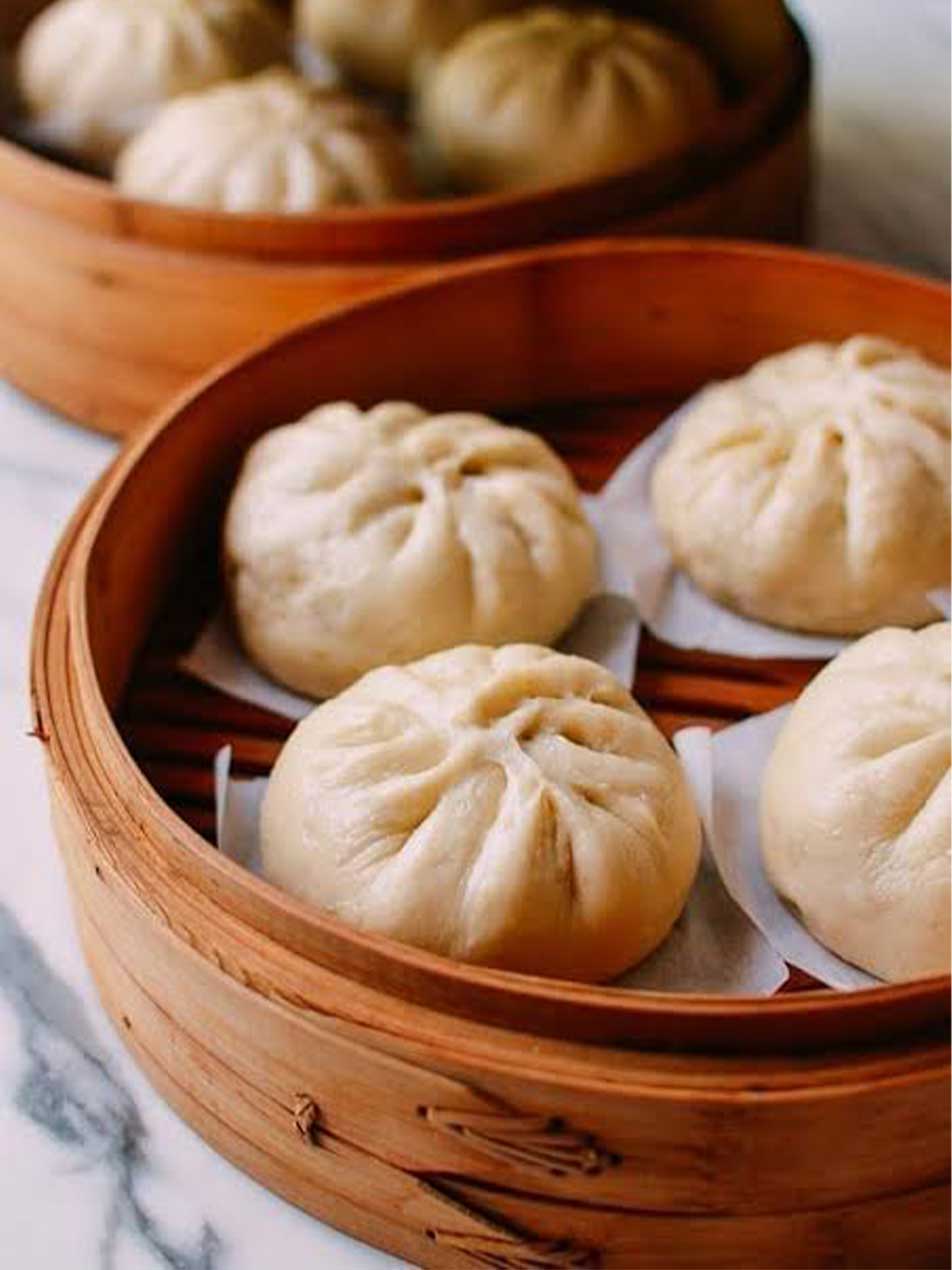
Ideal for baozi, steamed buns, dumplings, spring rolls and parathas across continuous production lines.
Case Studies
Real production lines with performance data — not renderings, not claims. Each installation documented with commissioning data.
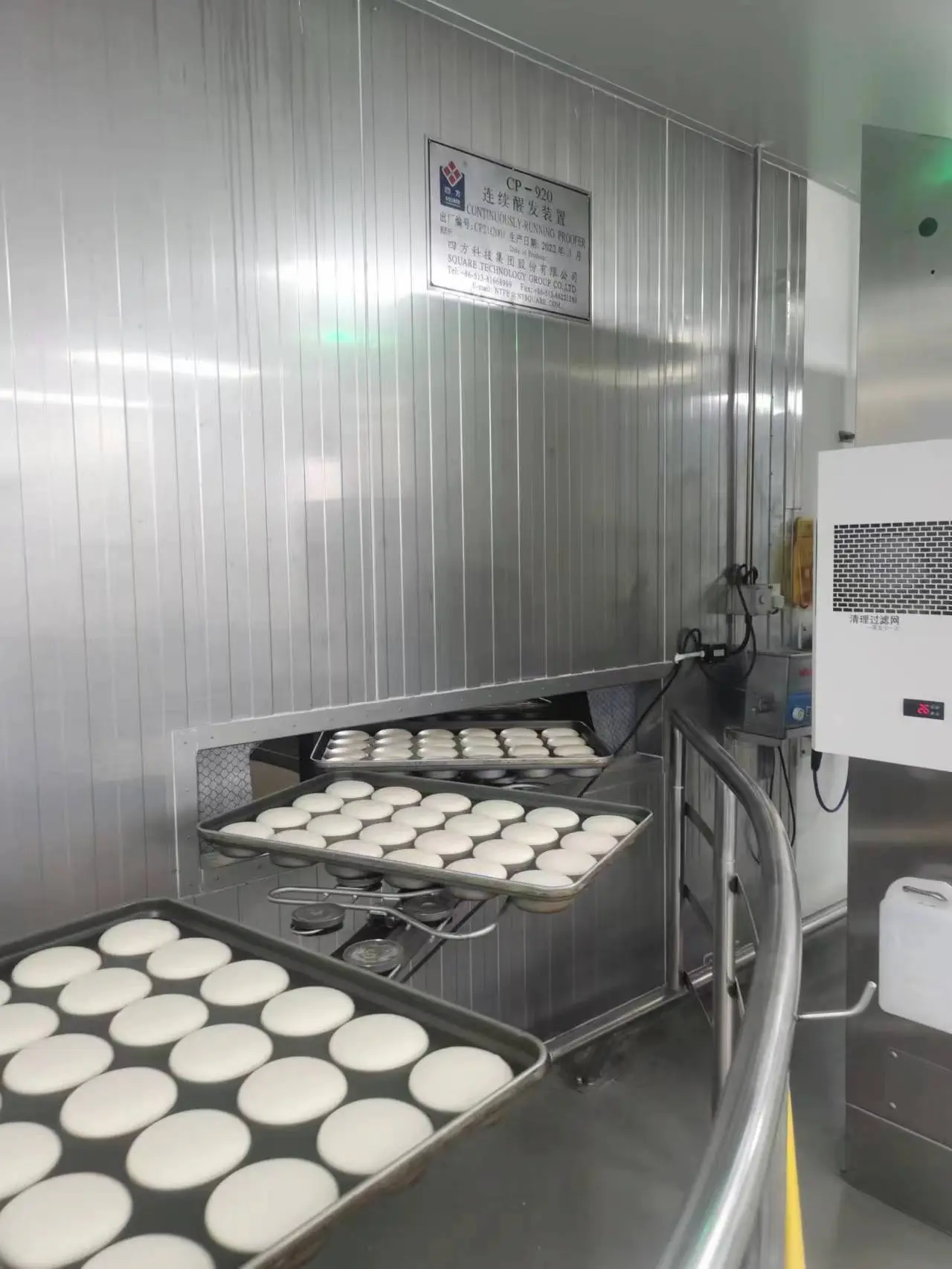
Square supplied continuous proofers to Bimbo, the world’s largest bakery group. Yielding 48,000 dough per
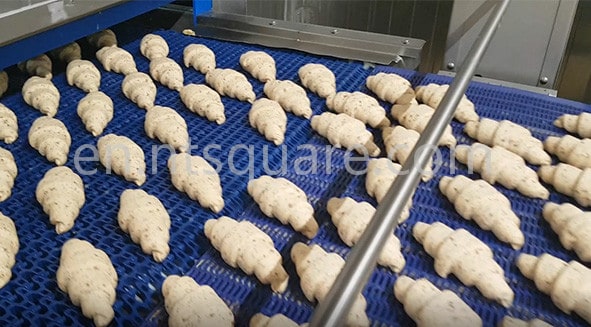
The customer WEDOME is a famous Chinese bakery chain enterprise founded in 1996 and headquartered
Yes, inside insulated enclosure, Square conveyor system facilitates seamless movement. Moisture(75-90%, ±1.5) and temperature(30-48℃, ±1)) regulation within the proofer is automated through PID-controlled valves.
This versatile proofer accommodates various bakery products and pastries, ensuring superior proofing quality with consistent moisture and temperature levels, surpassing traditional methods in automation and precision.
Yes. Continuous proofers are typically placed between the dough divider/moulder and the oven. They are designed for seamless integration with automated bakery lines.
We own CE, EAC, INF, CNAS, ISO, ASME, PED, U2, CSA, CRN certifications and 300+ patents, as well as 350+ engineers. Square vertically integrated production ensures quality control from raw materials.
Square can customize continuous proofer belt width, number of tiers, dwell time, temperature and humidity range, airflow pattern, enclosure, sanitation system, and integration with the bakery production line.
Square continuous proofers can be equipped with CIP (Cleaning-in-Place) cleaning to spray cleaning agents and rinse water through the chamber, belts, and carriers. This helps maintain hygiene while reducing manual cleaning time and downtime.
Engineering Inquiry
Share your product type, target capacity, line layout, utilities, and site conditions. Our engineers will review your requirements and recommend a suitable Continuous Proofer configuration.